Valley outages are written by a known season: the mid-June through September monsoon brings lightning, microburst winds, dust storms and flash outages, layered over summer heat that makes a long outage a health concern.
Problem: Valley outages are written by a known season: the mid-June through September monsoon brings lightning, microburst winds, dust storms and flash outages, layered over summer heat that makes a long outage a health concern.
Solution: A standby generator answers the outage with a load list, not a whole house by default: cooling, refrigeration, water, lights and the loads that cannot wait, sized and fueled honestly.
When to call: Arrange the assessment in the calm months - sizing, fuel and transfer planning done before monsoon season are appointments; the same work ordered from a hot, dark house is an expedition.
Phoenix does not imagine its outages; it schedules them. Every year from mid-June through September the monsoon builds over the desert in the afternoon - lightning in quantity, microbursts that flatten poles and trees in minutes, dust walls that roll across the valley, and sudden rain that floods washes and trips feeders across whole districts. And it all arrives on top of the year's highest temperatures, when the cooling system the outage just silenced is the appliance the household needs most. This guide is about living electrically in that season: what the storms do to power, what standby generation honestly offers in extreme heat, and how valley households size, fuel and maintain it.
The Phoenix Angle
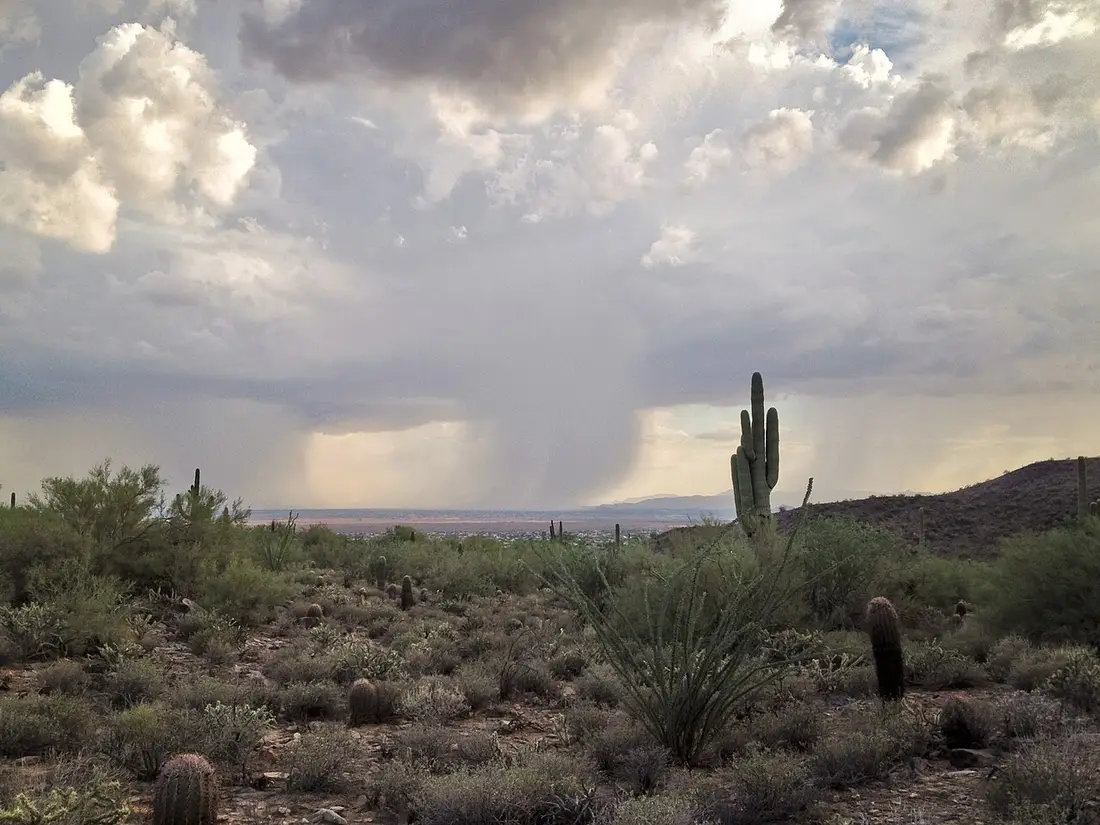
Phoenix sits in the Sonoran Desert, and heat writes the electrical calendar here: long summers with highs at and above 110 degrees, air conditioning that runs from morning well past midnight, attics that bake through the afternoon, and panels that carry their heaviest sustained load for months at a time. Layered over the heat is the monsoon, running from mid-June through September, when lightning, microbursts, dust storms and sudden downpours interrupt power and send surges through neighborhoods. An electrical system in Phoenix is not judged on a mild spring morning - it is judged in late July, at the peak of the load and in the middle of a storm week.
How the Valley Actually Loses Power
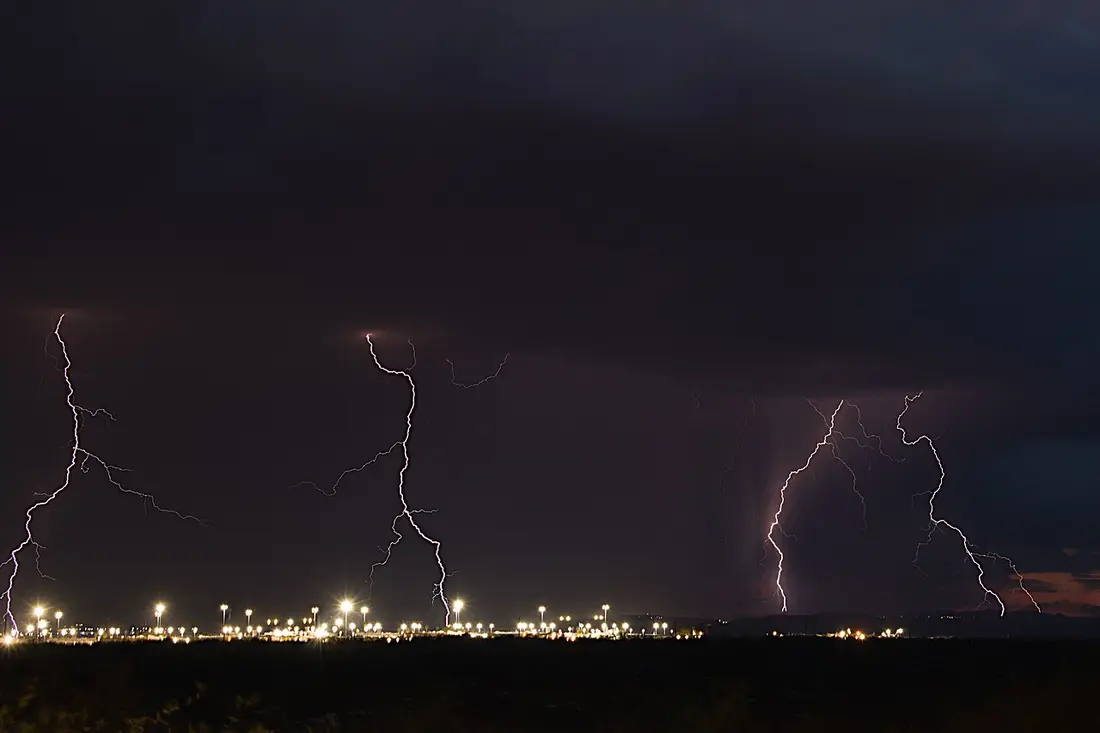
Three mechanisms write the outage log. Wind writes the first: microbursts - intense downdrafts that spread outward at ground level - snap poles, drop service lines and throw debris into equipment in a footprint that can be a few streets wide, and their restorations are measured in the damage's geography. Lightning writes the second: the desert Southwest's summer storms are prolific lightning producers, and strikes on or near lines trip feeders, damage transformers and send surges into homes whose lights barely flickered. Dust and rain write the third: dust storms coat and contaminate equipment, and flash downpours flood access and slow every crew trying to reach the damage.
The household meaning of each mechanism is different, and one fact runs through all of them: the heat does not pause for the outage. A winter outage elsewhere is a sweater and a blanket problem; a Phoenix outage in July is a rising indoor temperature, a refrigeration clock, and a genuine health concern for older residents, infants and anyone whose medication or condition makes heat dangerous. Wind outages argue for service-mast condition and a plan for hours. Longer storm damage argues for endurance - cooling, fuel, water. Surge events argue for protection at the panel, the simplest insurance in this entire guide. A readiness plan drawn without naming which mechanism it answers is a plan for a generic storm in a generic state; this valley's households can afford to be specific, because the season is.
What a Standby Generator Is, Precisely
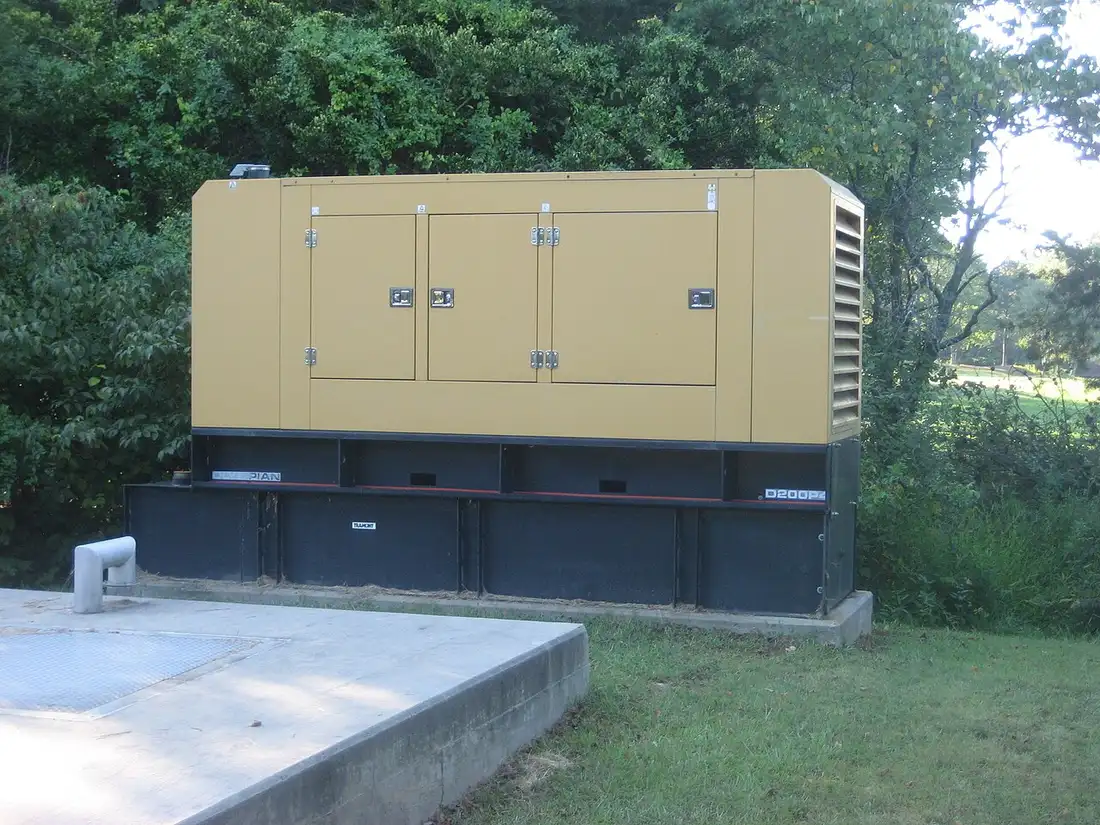
A standby system is a fixed generator, an automatic transfer switch and a fuel supply, installed as a unit: it senses the outage, starts itself, moves the house's chosen circuits onto its power, and reverses the whole ballet when the utility returns. Its defining decision is the load list - the circuits it carries. In Phoenix that list starts with cooling, because cooling is the load that protects people; then refrigeration, water where a pump provides it, lights, communications and medical equipment. The list is the household's honest answer to 'what actually cannot wait', and it is usually a fraction of the whole house.
The alternatives mark the scale. Portable generators, run manually on extension cords or through proper transfer equipment, serve a short list well, at the price of presence, weather and discipline - and in this climate, the discipline includes running the machine outdoors in extreme heat and storm debris. Whole-house standby systems erase the list by carrying everything, at a capacity and fuel cost sized to the largest version of the house's demand. Between them sits the managed-load standby: a mid-size unit whose controls let non-essential loads take turns, carrying a long list on a modest machine. The guide's consistent advice is to design from the list outward - the households that do are the ones whose systems, years later, still match their lives.
PROBLEM
→
SOLUTION
Fuel, Sizing and the Discipline of Readiness
Fuel is the system's second specification. Natural gas, where the service exists, offers effectively unlimited runtime with no storage discipline - the in-town answer. Propane trades that for a tank whose gallons are the endurance, counted in advance and managed before the season. Sizing follows from the list and its motors: the cooling system's and pool pump's starting surges, not their running watts, set the floor - which is why sizing is done at the panel with the list in hand, not from square footage at a showroom. A system sized to carry cooling must be sized for the compressor's start on the hottest day, because that is the day it will be asked.
Readiness is a calendar, and it is unforgiving of talent: exercise runs the machine performs weekly, oil, filter and battery service in the calm months, clearances kept, fuel counted before the season that spends it, and the unit's own heat exposure considered - a machine that lives in full desert sun needs its service kept, not assumed. The systems that fail during monsoon outages fail in the preceding springs, quietly, in side yards, one skipped service at a time. The households whose generators are uneventful during outages are the ones who were bored by their maintenance in April - which is, in this subject, high praise.
The Street's Memory: Reading Your Own Outage History
Every feeder has a biography, and the neighbors hold its archive: the monsoon evening that took the street for six hours, the microburst that dropped the same three blocks two summers running, the restoration order that always seems to reach your cul-de-sac last. That archive is a design document. A household on a resilient feeder plans for hours; a household at the end of a storm-exposed lateral plans for longer - and generator sizing, fuel choice and even the food and cooling strategy follow from which street you live on.
Utility restoration follows its own legible logic - substations, then feeders, then laterals, then individual drops - which means your position in that sequence is a property of your street, not of your luck. Owners who learn their position stop reading outages as random insults and start reading them as the schedule they are, and plan the standby system to the schedule's honest length.
The Loads That Cannot Wait: A Room-by-Room Audit
The outage load list repays literal walking. In the living spaces: cooling is the first line, because in a Phoenix summer it is a health load, not a comfort load - and the audit names which rooms must stay livable rather than assuming the whole house. In the kitchen: refrigeration's clock starts at the outage, and a full freezer buys time where an empty one buys little. At the water equipment: pumps and heaters carry their own claims, and their starting surges size the machine as much as any other single fact.
Then the modern claims: the medical device that outranks everything, the home office that is the family's income, the communications that turn a dark, hot house from an isolation cell into a managed inconvenience, and pool circulation where a long stop in summer heat damages water and equipment. The audit usually surprises households twice - once at how short the true list is, and once at how completely the list, written down, settles the arguments about generator size that showrooms could not.
Myth vs Fact
The Myth
A standby generator means never thinking about outages again - buy the biggest, and the subject closes. The showroom version of standby power is total and automatic, and it is the version owners repeat to each other.
VS
The Fact
Standby power is a maintained system with a load list, a fuel clock and a service calendar. The households whose generators are uneventful during monsoon outages sized from a list, counted their fuel, and kept the maintenance rhythm in the calm months. The machine is the smallest part of the system; the discipline is the rest of it.
The Related Service, In Depth
A standby generator in Phoenix answers a particular worry: an outage during extreme heat, when indoor temperatures rise quickly and a monsoon outage can stretch through the night. Planning starts with an outage list shaped by that reality, cooling for key rooms, refrigeration, medical equipment, pool circulation where needed, and the panel arithmetic and transfer equipment to carry it safely.
That is the service side of this guide's subject. When you are ready, the Generator Installation page carries the process, the coverage by neighborhood and the number to call.
The Process, Step by Step
Write your outage list
The circuits that cannot wait - cooling first, then refrigeration, water, medical, work - ranked. The list sizes everything; write it in calm weather.
Recall your street's record
Hours or days, wind or lightning: your feeder's monsoon outage history is the design input no catalog holds.
Choose fuel by property, not preference
Gas service, propane storage or portable discipline - each with its endurance counted in advance.
Commission before the season
Installation, a simulated-outage test under your real loads, and the maintenance calendar set - all before mid-June.
Prevention Checklist
Service the generator in the calm months - oil, filters, battery - on its hours and its calendar, not on your memory of the last outage.
Let the exercise run happen; a unit that has not run since last season is a hypothesis, not a system.
Count propane before monsoon season and keep the count in the house file; endurance you have not measured is endurance you do not have.
Fit panel surge protection alongside any generator plan - the monsoon outage's electrical danger is concentrated at its edges, where the generator does not guard.
Keep the transfer equipment's operation and a cooling plan for extended outages in the house file, so any adult in the home can read the system's state at 3 a.m.
A Field Checklist for Your Own Home
Write the outage load list room by room
cooling first, then refrigeration, pumps, medical, work, communications.
Reconstruct your street's monsoon outage history from memory and neighbors - hours versus longer changes the design.
Decide the fuel by property facts
gas service at the house, or a propane tank with a counted runtime.
Put the exercise and service rhythm on the calendar before the system is a season old.
What the Paperwork Should Show
Standby projects arrive in phases: the design visit (list, panel, site, fuel), the installation with its placement, pad, fuel and transfer work properly permitted, and the commissioning run under a simulated outage with the household watching its list come alive. Lead times stretch in monsoon season across the whole trade, which is why the calm months are this subject's honest shopping season. Portable-generator safety work - the inlet, the interlock, the cord plan - is a smaller scope with the same design discipline.
Owners prepare the design visit with the load list drafted, the panel accessible, a cooling plan for the hours before any system starts, and a decision about placement, shade and the neighbors' sightlines. The placement conversation goes better before concrete than after it, and the fuel conversation goes better with the tank gauge read rather than guessed.
How a Professional Works This Problem
A professional designs standby power from the outage list and the panel outward: loads itemized with cooling at the head and their motor starts respected, fuel chosen by the property's facts, transfer equipment that makes the system safe for the house and for the crews on the street, and a commissioning run under a simulated outage with the household watching its own list come alive. The proposal's quality is visible in its exclusions - the loads it honestly declines - because a system designed against a list is a system whose promises have addresses.
Mistakes That Make It Worse
Sizing by square footage or by the neighbor's unit: The list is the specification; every other method is a guess with a warranty.
Forgetting the fuel clock
A propane system whose tank was never counted is a runtime rumor, discovered at hour nine of a monsoon outage.
Backfeeding through a dryer outlet with a portable unit: The one shortcut this subject has no forgiving language for - it endangers the crews restoring your street.
Letting the exercise and service calendar lapse in the calm years: Standby systems fail in spring, quietly, and announce it in July.
The Bottom Line
The monsoon will keep its appointments. A standby system built from your list, your fuel and your street's history meets those appointments the way uneventful things do - by starting, carrying the house through the heat, and being forgotten until the next storm. That uneventfulness is the entire product.
Detector sensors expire: smoke alarms are replaced at about ten years from manufacture, CO alarms commonly at five to seven - and desert heat and dust give valley households extra reason to honor those dates rather than stretch them.
A breaker that trips repeatedly is reporting one of three things - an overloaded circuit, a short or ground fault, or a breaker at the end of its own life - and each has a different remedy.
How long do Phoenix monsoon outages actually last?
It depends on the mechanism, which is why this guide insists on naming it. A lightning trip on a feeder is commonly minutes to hours; microburst damage on a street is hours; a storm that damages equipment across a district can run longer, and it does so in summer heat. Your street's own history in past monsoon seasons is the honest planning figure, and longtime neighbors are its archive.
Can a portable generator run my cooling system and refrigerator?
A portable can carry a short, honest list - refrigerator, lights, communications, fans, a small cooling unit where the equipment allows - run outdoors, fed through rated cords or proper transfer equipment, never through a dryer outlet or a garage's air. Carrying a central cooling system is a larger ask that belongs to the sizing conversation, not an assumption. Its limits are presence and endurance: someone must start it, fuel it and mind it, in the weather that caused the outage.
Will a generator protect my electronics from monsoon surges?
No - that is a different device answering a different event. The damaging surge typically arrives with the outage's edges, on the utility's lines, where panel surge protection stands guard; the generator answers the darkness and the heat after. The two systems are complements, routinely planned together, and confusing their jobs leaves the electronics exactly as exposed as before.
When is the right time to install a standby generator?
In the calm months, for three reasons: the sizing and fuel planning deserve unhurried arithmetic, installers' calendars fill after every memorable storm, and the system should be commissioned and exercised before mid-June. The second time to start is right after the outage that taught the household its list - while the list is still written in fresh memory rather than reconstructed later.
Please note: Phoenix Electrician Pros is an independent directory and referral service, not an electrical contractor. The professionals reachable through this site are independent businesses; any agreement for work is between you and the professional you engage. Service information on this site is general educational material - the scope of any real electrical work is set by an on-site inspection.
A Breaker That Keeps Tripping, Lights That Flicker or a Panel Due for an Upgrade?
One call connects you with an electrical professional serving Phoenix and the surrounding metro communities - assessment, repair, service and installation.